


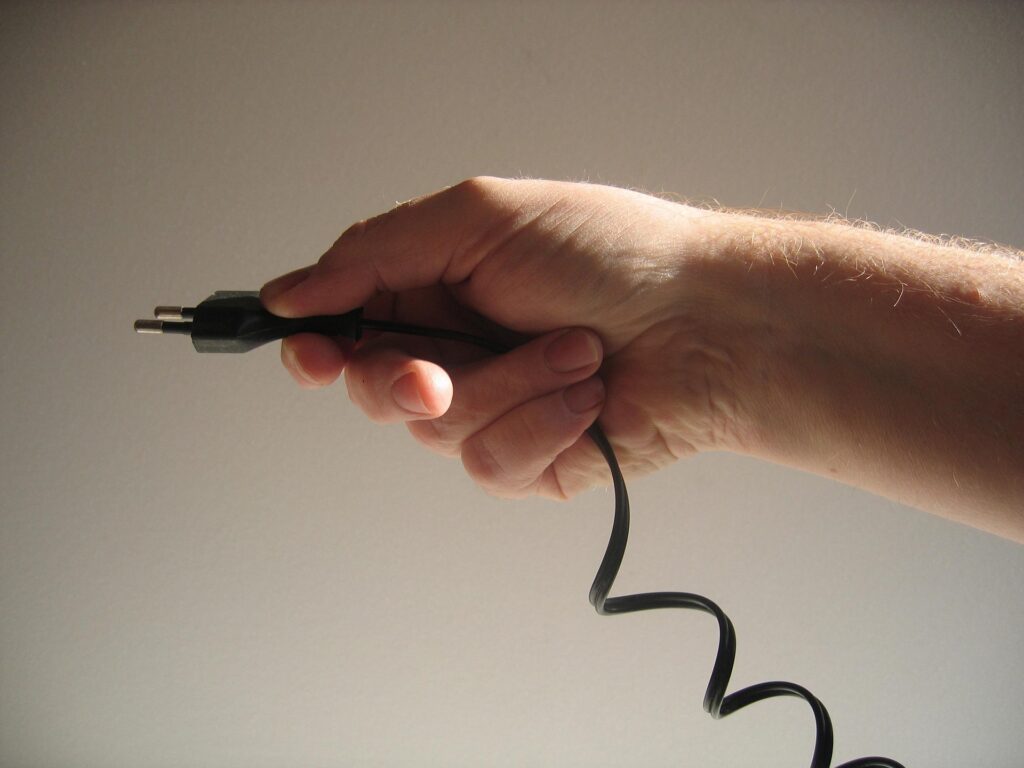
Most households have a drawer with adapters in it. Not one adapter — several, accumulated over years, none of them quite the one you need. It is such an ordinary annoyance that it reads as an oversight: something the world never got around to sorting out.
It did get around to it. In 1986, the International Electrotechnical Commission published a single plug design intended to replace all of them. It failed almost completely, and the way it failed says more about how standards actually work than the mess it was meant to clean up.
Why There Are So Many In The First Place
Electrification happened nationally, between roughly 1880 and 1930, and it happened fast. Every industrializing country built its grid with its own manufacturers, its own safety culture and its own regulator, at a time when there was no international body with the reach to coordinate any of it. By the time such bodies existed, every country had wire in every wall.
The divergence was not only cosmetic. Countries split on voltage — roughly 100–127 V in one camp, 220–240 V in the other — and on frequency. They split on how to earth an appliance, which is why some designs use a third pin, the German Schuko system uses side clips, and the French socket puts the earth pin in the wall rather than the plug. Each of those was a defensible answer to a real safety problem. They were simply arrived at separately.
The British Plug Is Not About Safety Culture
The clearest case of divergence-for-good-reasons is the British three-pin plug, which is routinely described as over-engineered by people who have not asked why it is shaped that way.
Before it, Britain used the BS 546 round-pin family: four sizes rated 2 A, 5 A, 15 A and 30 A, deliberately made non-interchangeable so you could not plug a lamp into a socket meant for something far heavier. Every appliance class had its own socket.
Then came a wartime copper shortage and the need to rewire a bombed country cheaply. The answer was the ring final circuit, in which sockets are looped in a ring back to the consumer unit rather than each running its own cable to the board — a topology that uses substantially less copper for the same delivered current.
That creates a problem. A ring is protected by a single large fuse at the board, sized for the ring, not for the thin flex on a table lamp. Something had to protect the appliance cable, and the only place left to put it was the plug.
So BS 1363, introduced in 1947 out of a committee whose thinking dates to a 1944 wartime building study, has a fuse in it. It also has shuttered live and neutral holes opened by the longer earth pin, and rectangular pins chosen to be incompatible with everything already in British walls, forcing a clean replacement rather than a decade of dangerous half-compatibility. The plug is not a monument to caution. It is the visible end of a decision about copper.
The Universal Plug That Only One Country Uses
IEC 60906-1, published in 1986, was the serious attempt: one compact, shuttered, earthed design for the whole 230 V world. The effort to adopt it across Europe was shelved in the mid-1990s.
Brazil took it up instead. The country had accumulated a dozen or more socket types through decades of importing appliances from everywhere, and standardizing on the international design looked like the obvious escape. Brazil published NBR 14136 in 1998, made it compulsory for new products from the mid-2000s, and fully mandatory in 2010.
Except it did not adopt the standard. It adopted a modified version: two ratings at 10 A and 20 A, with 4 mm and 4.8 mm pins, where the IEC specifies a single 16 A rating with 4.5 mm pins, and without the shutter requirement. The result is a plug that is incompatible with the international standard it is based on, and with everything else.
Brazil replaced twelve plug types with one that works in Brazil. The “universal” plug became, in practice, a national plug. Paraguay adopted the actual IEC standard in 2022, which brings the total to something short of a global transition.
What This Is Actually About
The comfortable explanation is protectionism — that plug standards persist as quiet trade barriers. There is something to it, and plug and socket rules have been used that way. But it is not the main reason, and treating it as the main reason gets the lesson backward.
The real obstacle is installed base. Changing a plug standard means rewiring or adapting every building in the country and replacing or refitting every appliance in it, for a benefit that accrues mostly to travelers and importers. Nobody who bears the cost captures the gain. Brazil demonstrated this in the most direct way available: it took a government mandate, ran for over a decade, imposed real costs on consumers and manufacturers, and produced a standard that still requires an adapter at the border.
Contrast the charging cable. The European Union’s common charger rules did in a few years what plug standardization could not do in forty — not because the regulation was cleverer, but because phone chargers turn over every two or three years and live in a drawer rather than inside a wall. The installed base was small and short-lived, so the switch was cheap.
Why It Still Matters
Because the window for setting a standard is open only briefly, and it closes before anyone has realized the thing is important.
Wall sockets were standardized at exactly the wrong moment: late enough that national systems had already hardened, early enough that no international mechanism existed to prevent it. Everything since has been adapters. The same shape of failure is visible today in charging connectors for vehicles, in payment terminal interfaces, in medical device data formats — all of them currently in the brief period where the decision is still cheap.
The drawer of adapters is not evidence that nobody tried. It is evidence of what trying looks like when you are forty years late.